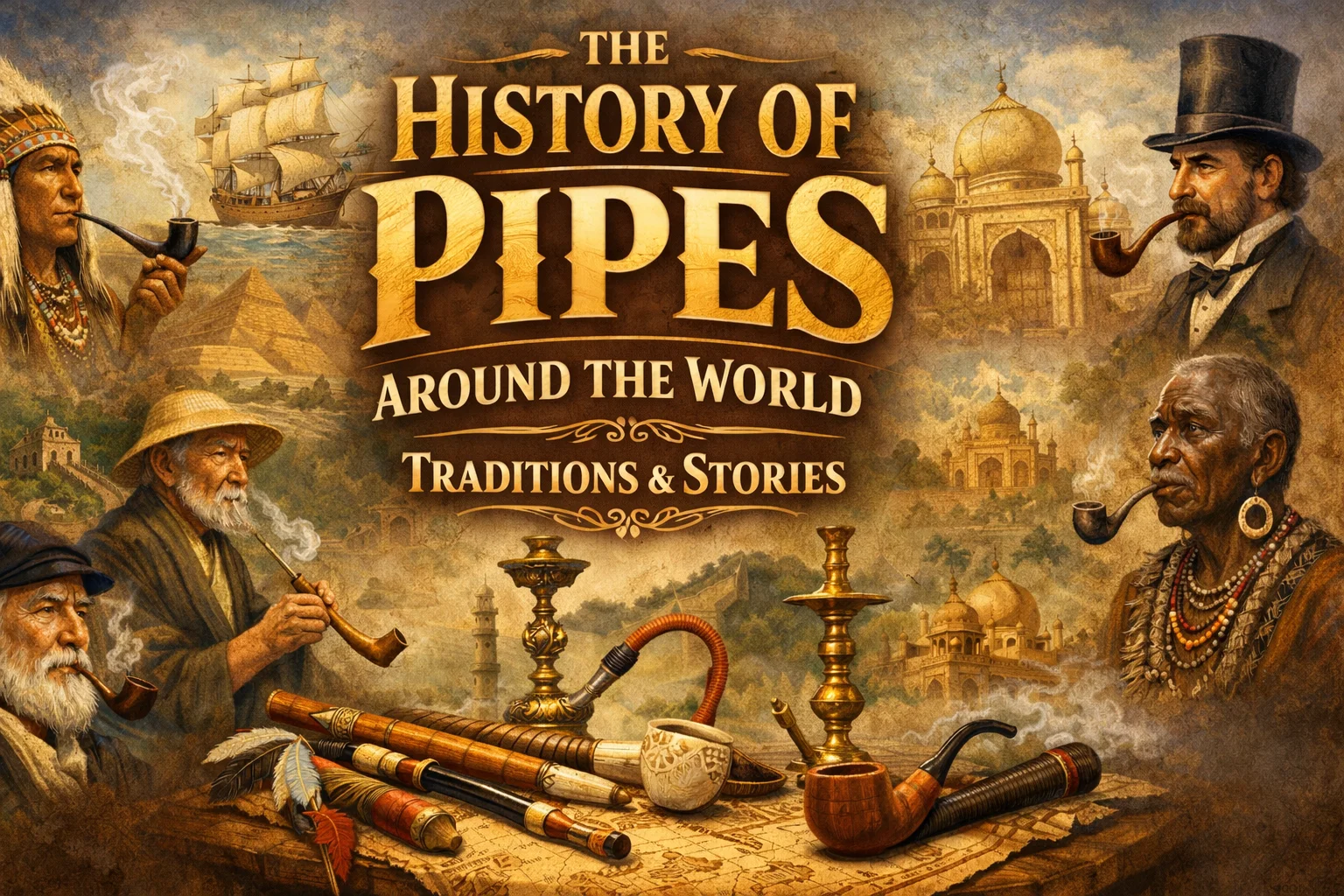



Pipes have been used by people around the world for many centuries. They are not just tools for smoking. Pipes are part of culture, tradition, and social life. From ceremonial pipes in North America to hookahs in the Middle East, pipes carry deep cultural heritage and stories.
North America: Ceremonial Pipes and Indigenous Traditions
Indigenous peoples in North America used pipes in important ceremonies and indigenous rituals. One well-known example is the peace pipe, also called the calumet. It symbolized unity, respect, and a spiritual connection.
Passing the ceremonial pipe helped settle conflicts, honor agreements, and perform sacred rituals. Even today, these pipes remain part of cultural heritage and help Indigenous communities protect their traditions and stories.
Europe: Pipes in Social Life
In 16th-century Europe, pipes became popular after tobacco arrived from the Americas. Clay pipes and meerschaum pipes were common in homes, taverns, and coffeehouses.
People used European pipes while talking, debating, and relaxing together. Many pipes had artistic designs that showed local culture and personal style. Pipes were not just for smoking traditions—they were part of daily social life.
Asia and the Middle East: Hookahs and Community
In Asia and the Middle East, especially in India and Persia, the hookah became an important social tradition. People shared hookahs during music, poetry, and storytelling.
This made smoking a group activity instead of a private one. Many hookahs were beautifully made with glass, metal, and detailed patterns. This showed the strong link between craftsmanship, culture, and social rituals.
Africa: Pipes and Cultural Identity
In different parts of Africa, people used clay and wooden pipes for both social and spiritual rituals. The designs often showed tribal identity, social status, or religious beliefs.
African pipes helped pass down traditions, stories, and values from one generation to the next. They played an important role in everyday life and cultural expression.
Why Pipes Are Part of Cultural Heritage
From ceremonial pipes to modern smoking traditions, pipes are more than simple objects. They represent connection, culture, and shared history.
The history of pipes shows how people across the world used smoking in social and spiritual rituals to reflect, celebrate, and build community. Pipes connect the past with today’s cultural practices.
FAQs
What is the history of pipes?
The history of pipes goes back thousands of years. Different cultures used pipes for ceremonies, social gatherings, and spiritual rituals.
What is a peace pipe or calumet?
A peace pipe, also called a calumet, is a ceremonial pipe used by Indigenous peoples in North America. It represents peace, respect, and spiritual connection.
Why are pipes important in cultural heritage?
Pipes are important because they show how communities shared traditions, beliefs, and social values over time.
What is a hookah used for?
A hookah is used mainly in Asia and the Middle East. It is shared during social gatherings and is part of long-standing smoking traditions.
Were pipes used only for smoking?
No. Pipes were also used in social and spiritual rituals, ceremonies, and as symbols of identity and culture.
Explore the Stories Behind Every Pipe
The history of pipes shows how smoking traditions connect people, culture, and time. Each pipe tells a story of social life, spiritual rituals, and cultural heritage from around the world.
If you want to learn more about ceremonial pipes, hookahs, and global smoking traditions, keep exploring our articles. Discover how simple objects like pipes carry deep meaning and connect past traditions with modern life. Order Now!